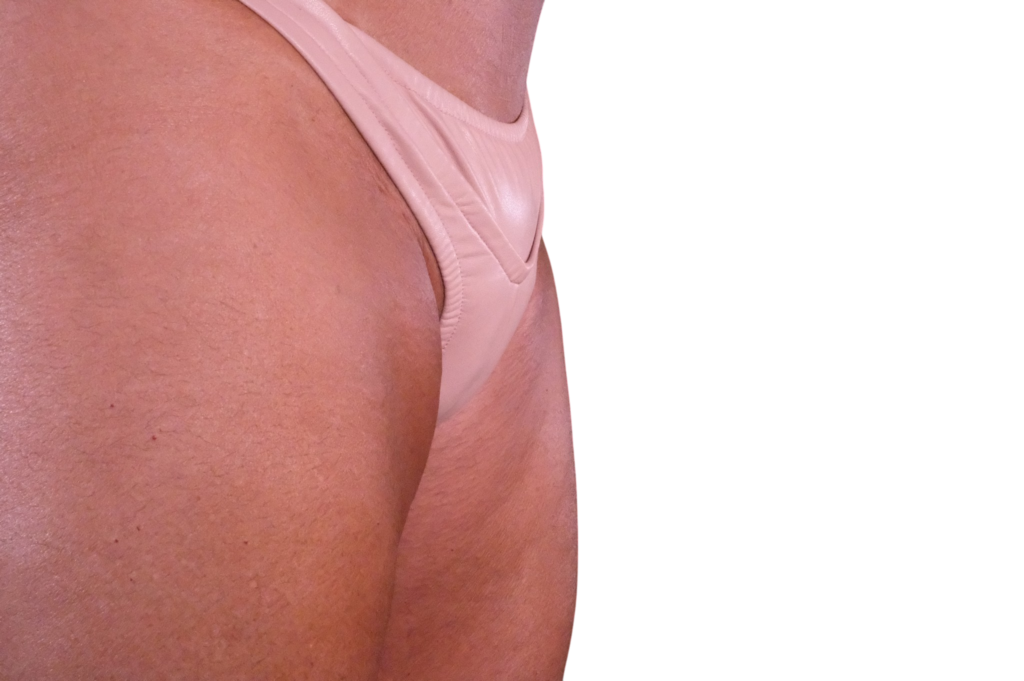
Gender-Fluid Swimwear for MTF Transformation: A Complete Foundational Guide
Gender-fluid swimwear has become an increasingly important part of modern swim fashion because it allows people to move beyond the old idea that swimsuits must look strictly “male” or strictly “female.” For people exploring MTF transformation, transfeminine presentation, nonbinary identity, cross-gender expression, or a softer feminine appearance, that flexibility can be especially valuable.
Instead of forcing the wearer into one traditional category, gender-fluid swimwear can help reshape how the body is presented.
A swimsuit can minimize masculine contours.
It can emphasize the hips and legs.
It can create a smoother front.
It can introduce traditionally feminine bikini cuts.
It can reduce or eliminate the appearance of a conventional male pouch.
And it can allow the wearer to experiment with a much more feminine overall silhouette without necessarily committing to permanent physical changes.
That is what makes gender-fluid swimwear for MTF transformation such an interesting category.
It is not simply about wearing a women’s swimsuit.
It is about using design, fabric, compression, shaping, and proportion to create the appearance that best matches the wearer’s desired gender presentation.
What Is Gender-Fluid Swimwear?
Gender-fluid swimwear is swimwear designed without rigid dependence on traditional male and female fashion rules.
For decades, men’s and women’s swimwear were separated very clearly.
Men were expected to wear trunks, board shorts, racing briefs, or square-cut suits.
Women were expected to wear bikinis, one-piece swimsuits, high-cut bottoms, cheeky bottoms, thongs, and other distinctly feminine silhouettes.
Gender-fluid swimwear challenges that division.
A gender-fluid swimsuit may combine features traditionally associated with both categories.
For example, a swimsuit might use the secure front construction associated with men’s swimwear while incorporating the high-cut legs and narrow bikini sides historically associated with women’s designs.
Another style might use compression to create an extremely smooth front while maintaining a bikini or thong silhouette.
The objective is choice.
The wearer decides how masculine, feminine, neutral, or transformed the final presentation should appear.
What Does MTF Transformation Mean in Swimwear?
In the context of swimwear, MTF transformation usually refers to creating a more feminine outward presentation on a body that has traditionally been fitted for men’s swimwear.
This does not necessarily mean medical transition.
For some wearers, it may be part of a larger transgender transition.
For others, it may simply involve clothing, swimwear, body shaping, grooming, or temporary presentation.
An MTF swimsuit can therefore range from a slightly feminine men’s bikini to a highly specialized design intended to create a much more traditionally female-looking silhouette.
Different people want different degrees of transformation.
One person may simply want a men’s bikini with narrower sides.
Another may want a smooth front that minimizes genital projection.
Someone else may want a swimsuit designed to work with tucking.
Another wearer may want the lower body to appear almost completely feminine.
Gender-fluid swimwear allows all of these approaches to exist within the same broad category.
Why Swimwear Is So Important for Gender Presentation
Swimwear is one of the most revealing forms of everyday clothing.
There are fewer layers.
There is less fabric.
The material stretches tightly over the body.
That means body shape becomes highly visible.
For someone exploring a feminine presentation, swimwear can therefore feel more challenging than everyday clothing.
A blouse can reshape the upper body.
A skirt can alter the appearance of the hips.
A dress can visually change the waist.
Swimwear leaves far less room for concealment.
This is why thoughtful swimsuit construction matters so much.
A well-designed MTF or gender-fluid swimsuit can change the apparent proportions of the body even though the garment itself is very small.
The Move From Masculine Pouches to Smooth Fronts
Traditional men’s swimwear often emphasizes or accommodates a front pouch.
That construction makes sense when the objective is support and comfort, but it also reinforces a distinctly masculine silhouette.
Gender-fluid and MTF swimwear often take the opposite approach.
Instead of emphasizing the pouch, the design may attempt to minimize it.
Compression panels can reduce projection.
Specialized cuts can hold tissue closer to the body.
Tucking-compatible designs can provide a smoother appearance.
Some garments use multiple layers or reinforced front panels to prevent unwanted outlines.
The visual difference can be substantial.
A conventional men’s bikini may clearly announce itself as men’s swimwear because of the pouch.
A nearly identical bikini with a smooth front can appear significantly more feminine.
Smooth-Front MTF Swimwear
Smooth-front swimwear is one of the most accessible forms of gender-fluid transformation.
The goal is not necessarily to create a detailed anatomical illusion.
Instead, the swimsuit simply reduces the appearance of a conventional male bulge.
That can make a dramatic difference.
Once a pronounced front projection disappears, the eye tends to focus more on the waist, hips, thighs, and overall swimsuit shape.
This can make the lower body appear softer and more feminine.
Smooth-front designs are especially useful for people who want feminization without an extremely elaborate tucking routine.
Tucking Swimwear
Tucking is another common approach.
A tucking swimsuit is designed to help secure external genital tissue in a flatter configuration.
Some suits use firm compression.
Others include reinforced panels.
Some rely upon specialized inner construction.
The effectiveness of any particular design depends on anatomy, fabric, cut, and individual comfort.
Tucking can produce a very flat silhouette, but safety matters.
A tuck should not create sharp pain, numbness, significant discoloration, loss of circulation, or persistent discomfort.
People new to tucking should experiment gradually and privately before relying on a technique for an extended beach or pool day.
Non-Tucking Feminizing Swimwear
Not everyone wants to tuck.
Fortunately, MTF transformation does not require it.
Some gender-fluid swimsuits are designed primarily to visually minimize or redistribute the front profile without full tucking.
This may be accomplished with:
- Compression
- Strategic seaming
- Thick or lined fabrics
- Smaller front panels
- Internal support structures
- Dark colors or patterned fabrics
- Higher leg openings
- Carefully positioned waistlines
The result may not be completely flat, but it can still look substantially less masculine than a conventional men’s swimsuit.
For many wearers, that is exactly what they want.
Bikini Swimwear for MTF Transformation
The bikini is one of the most effective silhouettes for gender-fluid transformation because the cut itself has long been associated with feminine swim fashion.
A gender-fluid or MTF bikini can use:
- Narrow sides
- High-cut legs
- Low-rise fronts
- Brazilian backs
- Cheeky rear coverage
- String sides
- Scoop fronts
- Feminine colors or prints
The important point is that a bikini can visually change the proportions of the body.
High-cut legs create the appearance of longer legs.
Narrow sides expose more hip.
A lower front can make the torso appear longer.
A cheekier back can emphasize the shape of the buttocks.
Together, these features can produce a dramatically more feminine lower-body silhouette.
High-Cut Legs and Feminization
High-cut swimsuit legs are especially important in feminine presentation.
The leg opening can make an enormous difference in how the hips and thighs appear.
Traditional men’s swim briefs often have a lower, more horizontal leg opening.
Women’s bikini bottoms frequently curve upward toward the hip.
That upward curve exposes more upper thigh and creates the visual impression of longer legs and a more pronounced hip line.
When incorporated into MTF swimwear, this single design feature can make a swimsuit appear much more feminine.
Brazilian and Cheeky Rear Designs
Rear coverage is another area where gender-fluid swimwear has expanded dramatically.
Traditional men’s swimsuits tend to provide full rear coverage.
Feminine swimwear frequently exposes more of the buttocks.
Brazilian cuts, cheeky backs, and scrunch-back designs can therefore play an important role in MTF presentation.
A narrower rear panel can visually emphasize curves.
A scrunch seam may create additional separation and definition.
A high-cut Brazilian back can also make the legs appear longer.
These styles can be particularly useful for wearers who already have naturally rounded hips or buttocks, but they can also change the appearance of straighter body types.
Thong Swimwear and Gender Fluidity
Thongs are among the most gender-neutral forms of modern swimwear.
From behind, a men’s thong and women’s thong can sometimes look almost identical.
That makes the thong especially interesting for gender-fluid fashion.
The front panel becomes the primary area where traditional gender differences remain.
If the front is reshaped or minimized, the entire suit can appear extremely feminine.
For someone seeking a strong MTF transformation, a smooth-front thong can therefore create one of the clearest visual departures from conventional men’s swimwear.
G-Strings and Ultra-Minimal Designs
G-strings take this idea further.
The sides and rear may consist almost entirely of narrow straps.
That leaves very little material to carry traditional gender cues.
As a result, the design becomes highly dependent upon the front silhouette.
A smooth or minimized front can make an ultra-minimal G-string appear much closer to traditionally feminine swimwear.
These styles are bold and highly revealing, so they are best suited to environments where minimal swimwear is socially and legally accepted.
One-Piece Swimsuits for MTF Presentation
Gender-fluid transformation is not limited to bikini bottoms.
One-piece swimsuits can also be effective.
A one-piece can create a continuous vertical line from chest to hips.
That can help visually reshape the torso.
High-cut legs can lengthen the appearance of the lower body.
A scoop neck or plunging neckline can create a softer, more feminine upper silhouette.
Some one-piece suits include built-in shaping, removable breast pads, or space for breast forms.
Others emphasize the waist.
For wearers seeking a more complete transformation rather than simply a feminine swimsuit bottom, one-piece styles can be extremely effective.
Swimwear and Breast Presentation
Upper-body presentation also influences how feminine a swimsuit appears.
For people who have developed breasts through HRT, swimwear can be selected much like any other women’s swimsuit.
For people without substantial breast development, there are several options.
Some swimsuits include padded cups.
Others can accommodate removable inserts.
Certain styles can be worn with breast forms.
Still others simply use the lines of the garment itself to create a more feminine chest.
A halter top, triangle bikini top, bandeau, or scoop-neck one-piece can change the visual proportions of the shoulders and torso even without significant breast projection.
Creating the Appearance of More Curves
Many people exploring MTF presentation want the hips to appear wider relative to the waist.
Swimwear cannot fundamentally change skeletal structure, but visual design can influence perceived proportions.
High-cut legs can emphasize the hips.
A narrow waistline can create contrast.
Side ties can add visual width.
Bright or patterned bottoms can draw attention toward the lower body.
Dark tops paired with more visually active bottoms can also create a stronger hip emphasis.
Some wearers use hip padding, although this requires careful selection because ordinary padding may not be suitable for swimming.
If body-shaping products are used in the water, they should be designed specifically for that purpose.
Color and Print Choices
Color affects gender presentation more than many people realize.
There is no rule that certain colors belong to one gender, but cultural associations still influence how clothing is perceived.
Pastels, pinks, florals, metallics, tropical prints, soft blues, lilacs, and bright neons can create a very different impression from dark athletic swim briefs.
Patterns can also help disguise contours.
Busy prints tend to make small shape variations less noticeable.
Solid light colors usually reveal more.
Dark solid fabrics tend to minimize.
For someone concerned about genital outlines, patterned or darker swimwear can be especially useful.
Fabric Matters
Fabric determines how closely a swimsuit follows the body.
Thin, highly elastic material can reveal virtually every contour.
Thicker fabric provides more smoothing.
Lining can also make a major difference.
A double-layer front panel generally provides more concealment than an unlined swimsuit.
Compression fabrics can provide even greater reshaping.
For MTF transformation, the ideal fabric depends upon the desired effect.
Someone who wants maximum smoothing may prefer thicker compression material.
Someone who wants a delicate, feminine bikini appearance may prioritize softer, lighter material.
Feminizing Without Erasing Individuality
MTF swimwear does not have to imitate one standardized idea of a woman.
Femininity itself is extremely diverse.
Some women prefer athletic swim briefs.
Some wear bikinis.
Some love thongs.
Some wear board shorts.
Some wear one-piece suits.
Gender-fluid swimwear is valuable because it allows the wearer to decide what femininity means personally.
One person may want a completely smooth front and a pastel string bikini.
Another may want a black athletic brief with only subtle feminizing elements.
Someone else may prefer an androgynous swimsuit that removes obvious gender cues altogether.
All of these can exist within gender-fluid fashion.
Gender-Canceling Swimwear
Some experimental swimwear designs go beyond feminization and attempt to minimize gender cues altogether.
These are sometimes described as gender-neutral or gender-canceling designs.
Instead of emphasizing either a masculine pouch or a traditionally feminine contour, the swimsuit creates an extremely minimal or smooth front.
The overall appearance becomes intentionally ambiguous.
For nonbinary and gender-fluid wearers, this can be particularly appealing.
For someone exploring MTF transformation, gender-neutral swimwear can also serve as a transitional step between conventional men’s swimwear and strongly feminine styles.
MTF Swimwear for Someone Just Starting
The first step does not have to be dramatic.
Someone accustomed to board shorts might begin with a conventional swim brief.
From there, they might try a narrower bikini.
Next could be a high-cut design.
Then perhaps a smooth-front bikini.
After becoming comfortable, they may explore cheekier backs, thongs, or more specialized MTF construction.
This gradual approach can help someone learn what actually feels right rather than assuming that maximum transformation is automatically the goal.
Trying Swimwear at Home First
Testing a swimsuit privately before wearing it publicly is especially useful with MTF and gender-fluid designs.
Look at the swimsuit from several angles.
Walk.
Sit.
Bend.
Move your legs.
If the suit is intended for swimming, test how secure it feels during movement.
Remember that fabric behaves differently when wet.
A swimsuit that seems secure while dry may stretch, cling differently, or become more transparent in water.
Choosing the Right Venue
Gender-fluid swimwear is becoming more visible, but dress expectations vary widely.
A tiny thong may be perfectly normal at an adults-only resort and inappropriate at a municipal family pool.
A feminine bikini may attract little attention at an LGBTQ+-friendly beach but feel more conspicuous elsewhere.
Check the rules of the specific location.
That is especially important for:
- Hotel pools
- Cruise ships
- Resorts
- Public recreation centers
- Fitness clubs
- Water parks
- Family beaches
The objective is not to limit expression but to choose an environment where the swimsuit can actually be enjoyed.
Grooming and the Overall Presentation
For some wearers, grooming is part of the transformation.
Removing or trimming body hair can change how a bikini or high-cut swimsuit appears.
Legs may look more traditionally feminine when smooth.
A clean bikini line can make narrow swimwear look more polished.
Others prefer natural body hair.
Neither approach is required.
Gender-fluid fashion is precisely about reducing rigid rules.
The goal should be a presentation that feels intentional to the wearer.
MTF Transformation Without Medical Transition
One important feature of gender-fluid swimwear is that it allows experimentation without requiring medical intervention.
Someone may want to present femininely at the pool without being on hormones.
Someone may be years into transition.
Someone may never plan to medically transition.
Another person may simply enjoy switching between masculine and feminine presentation.
Swimwear does not require a particular identity or medical history.
Clothing is one of the most reversible forms of gender expression.
That makes it especially useful during exploration.
The Emotional Effect of Seeing a Feminine Reflection
For some people, the most important part of gender-fluid swimwear is not how other people see them.
It is how they see themselves.
A conventional men’s swimsuit may emphasize features the wearer doesn’t want to focus on.
A feminine bikini can change that visual experience.
The legs may appear longer.
The hips may look more pronounced.
The front may look smoother.
The rear may appear more rounded.
The entire lower body can take on a more feminine character.
For someone seeking that presentation, seeing those changes in the mirror can be deeply meaningful.
Safety With Compression and Tucking
Any technique that puts pressure on genital tissue should be approached cautiously.
Pain is not an indication that the technique is working better.
Stop and readjust if you experience:
- Numbness
- Significant pain
- Persistent tingling
- Skin damage
- Cold tissue
- Noticeable discoloration
- Swelling
- Difficulty urinating
Do not sacrifice circulation or tissue health for appearance.
If a particular swimsuit only works when tightened to the point of pain, it is probably the wrong size or design.
Choosing an MTF or Gender-Fluid Swimsuit
When comparing designs, consider several factors.
Desired level of feminization
Do you want subtle, moderate, or dramatic transformation?
Front profile
Do you want normal support, compression, smoothing, tucking compatibility, or an extremely minimized appearance?
Rear coverage
Choose from full coverage, cheeky, Brazilian, thong, or G-string styles.
Leg cut
Higher cuts generally create a more traditionally feminine silhouette.
Fabric
Choose enough stretch for comfort while considering how much smoothing or compression you want.
Lining
Lined designs generally reveal less anatomical detail.
Activity
A swimsuit intended for active swimming should usually be more secure than one designed primarily for tanning or poolside fashion.
Gender-Fluid Swimwear and the Future of Men’s and Women’s Fashion
The traditional separation between men’s and women’s swimwear is steadily becoming less important.
Men are wearing smaller bikinis.
Women wear board shorts.
Thongs are sold to multiple genders.
Nonbinary swimwear collections are growing.
Transgender and transfeminine customers increasingly expect garments designed specifically for their bodies and presentation goals.
That means the future of swimwear is likely to be defined less by gender labels and more by function, fit, and desired appearance.
A shopper may eventually choose between:
Athletic.
Minimal.
Smooth-front.
Pouch-enhancing.
High-cut.
Full coverage.
Tucking.
Thong.
Brazilian.
Gender-neutral.
Feminizing.
That is a much more useful system than simply dividing an entire store into “men” and “women.”
Frequently Asked Questions About Gender-Fluid MTF Swimwear
What is gender-fluid swimwear?
Gender-fluid swimwear combines or disregards traditional men’s and women’s swimsuit conventions, allowing wearers to choose cuts and silhouettes according to personal presentation rather than gender labels.
What is MTF swimwear?
MTF swimwear generally refers to swimsuits designed or selected to create a more feminine appearance for a wearer with male genital anatomy or a traditionally male body shape.
Does MTF swimwear always require tucking?
No. Some designs are made specifically for tucking, while others use compression, smoothing panels, or strategic construction to reduce frontal projection without a full tuck.
Can a bikini make a male body look more feminine?
Yes. High-cut legs, narrow sides, cheeky backs, smooth fronts, and feminine proportions can significantly change the perceived shape of the lower body.
Are thongs useful for MTF transformation?
They can be. Because thong backs are already largely gender-neutral, changing the front profile can make the overall swimsuit appear considerably more feminine.
What is smooth-front swimwear?
Smooth-front swimwear minimizes the appearance of frontal anatomy to create a flatter or less traditionally masculine silhouette.
Can someone wear MTF swimwear without identifying as transgender?
Yes. Swimwear styles can be worn by transgender women, transfeminine people, nonbinary people, crossdressers, gender-fluid people, feminine men, or anyone else who likes the appearance.
Is tucking safe?
Many people tuck successfully, but excessive pressure or prolonged constriction can cause problems. Pain, numbness, discoloration, or loss of circulation are warning signs that the technique should be stopped or adjusted.
What swimsuit is best for someone beginning MTF presentation?
A moderate bikini or smooth-front swim brief can be an approachable starting point. It can create a noticeably softer presentation without requiring the extreme exposure of a thong or micro swimsuit.
Final Thoughts: Gender-Fluid Swimwear Creates More Ways to Be Yourself
Gender-fluid swimwear for MTF transformation is ultimately about increasing options.
It allows someone to move away from a conventional masculine swimsuit without having to fit into a single predetermined definition of feminine fashion.
A person can choose a subtle transformation.
They can create a smooth front.
They can wear a high-cut bikini.
They can explore Brazilian or cheeky styles.
They can wear a thong.
They can choose a one-piece.
They can tuck, use compression, or simply select a suit whose proportions create a more feminine overall appearance.
Most importantly, these choices are reversible and personal.
For some wearers, gender-fluid swimwear is simply fashion.
For others, it is part of gender exploration.
For a transgender woman, it may help her achieve a beach or pool presentation that feels much closer to how she wants to see herself.
And for someone somewhere between traditional gender categories, it can provide something equally valuable: a swimsuit that does not force the body into somebody else’s definition of what men’s or women’s swimwear is supposed to look like.
The future of swimwear is not about eliminating masculine or feminine styles.
It is about eliminating the idea that a person is only allowed to choose one of them.