Wearing Gender-Fluid Swimwear
A detailed guide to MTF, gender-neutral, and gender-canceling designs (and how to choose what works for you).
Gender-fluid swimwear sits in a sweet spot between fashion, function, and freedom. For some people it’s about presenting more femme. For others it’s about removing gender cues entirely. And for plenty of folks, it’s simply the thrill of wearing something sleek, minimal, and expressive—without having to fit a traditional “men’s trunks vs. women’s bikini” box.
This guide breaks down the main design families you’ll see in gender-fluid swimwear—especially styles aimed at MTF presentation, gender-neutral silhouettes, and “gender-canceling” looks—plus fit tips, comfort tips, and how to build a small wardrobe that lets you shift your vibe day-to-day.
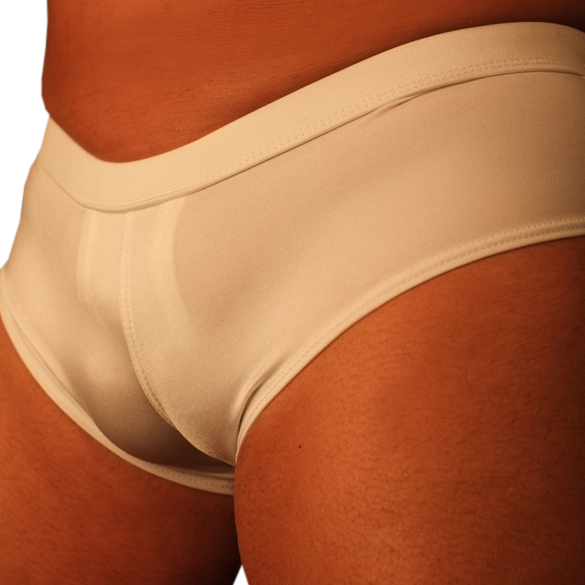
1) What “gender-fluid swimwear” can mean in practice
Gender-fluid swimwear isn’t one single cut. It’s usually one (or more) of these goals:
A. Femme-leaning presentation (MTF styling)
- Smoother front profile
- Feminine lines (higher cut legs, cheekier backs, bikini/thong shapes)
- Some designs hide or reduce bulge visually
B. Gender-neutral minimalism
- Looks like “just a swimsuit,” not strongly coded male or female
- Often brief-based silhouettes, sleek fabrics, simple lines
C. Gender-canceling (anti-bulge / de-emphasis)
- Designs that reduce visibility of genital outline
- Can range from subtle smoothing to very flat “doll” looks
- Often paired with compression, shaping, or special paneling
You can mix these: a suit can be femme-cut and also gender-canceling, or neutral-looking while still doing a lot of smoothing.
2) The core design families (with how they work)
2.1 MTF “tucking-friendly” bikini bottoms
These look like classic women’s bikini bottoms but are engineered for:
- More front coverage
- Stronger lining
- Firmer waistband
- Sometimes wider gusset / front panel for stability
Best for: femme presentation, pool parties, beach lounging, under coverups
Watch for: leg elastic that bites; too-small sizing that becomes painful
Fit tip: You want “secure” not “crushing.” If you feel numbness, sharp pain, or coldness—size up and/or switch to a different design with better paneling.
2.2 High-waisted “retro” bottoms (MTF and gender-neutral)
High waist is one of the most underrated gender-fluid cuts. It can:
- Smooth the lower belly and hip area
- Provide a more “feminine” torso proportion
- Hold shaping panels more comfortably than low-rise
Best for: confident coverage, vintage looks, mixing with crop rashguards
Watch for: rolling waistbands if the elastic is weak
Style trick: Pair a high-waisted bottom with a simple rashguard or a bikini top under a sheer shirt—instantly gender-fluid without “trying too hard.”
2.3 Skirted bottoms and swim skorts (soft gender camouflage)
A skirt layer does two things:
- Adds a flowing, traditionally femme cue
- Breaks up the outline of the front and hips visually
Best for: beginners, public beaches, anyone wanting extra privacy
Watch for: drag in water; skirt flipping up in waves
2.4 One-piece suits (classic femme, stealthy gender-fluid)
A one-piece is the ultimate “I’m wearing a swimsuit” statement that doesn’t need explanation. Key variants:
- Sport one-piece: racerback, athletic seams, neutral but femme-coded
- Fashion one-piece: deep V, cutouts, high-cut legs, dramatic silhouettes
- Shaping one-piece: built-in compression panels
Best for: comfort, coverage, body shaping, elegant presentation
Watch for: torso length—many one-pieces fail simply due to short/long torso mismatch
Fit tip: If you’re between sizes, choose based on torso length first, not waist.
2.5 Swim dresses (maximum coverage, maximum “public confidence”)
Swim dresses are a full outfit in one piece, often with:
- Built-in briefs
- Lining panels
- Adjustable straps
Best for: crowded pools, conservative beaches, early transition confidence
Watch for: heat (can feel warmer than minimal suits)
3) Gender-neutral designs: the “not male, not female” zone
Gender-neutral swimwear usually focuses on simple geometry and clean fabric behavior rather than obvious gender cues.
3.1 Neutral swim briefs (minimal cues, maximum sleekness)
A plain brief in a matte fabric can read surprisingly neutral—especially in black, navy, charcoal, or deep jewel tones. Small changes matter:
- Slightly higher waist = more neutral/femme
- Wider side straps = more neutral/masc
- Moderate leg cut = most neutral
Best for: “just a swimsuit” energy, sporty beach style
Watch for: shiny fabrics that amplify outlines
3.2 Short “micro trunk” hybrids
These are tiny swim shorts with:
- very short inseam
- snug fit like briefs but with a short-leg look
They read gender-fluid because they borrow from both men’s and women’s swim trends.
Best for: anyone nervous about briefs but wanting sleek spandex
Watch for: fabric riding up; choose designs with stable leg bands
3.3 Rashguard + neutral bottom combos
Rashguards are a cheat code for gender-fluid styling:
- They reduce how much attention is on the lower half
- They make the whole look “sport” rather than “gender statement”
Best for: public confidence, sun protection, neutral presentation
Watch for: rashguards that cling too tightly if that’s not your goal
4) Gender-canceling designs (de-emphasis, smoothing, anti-bulge)
This category is about reducing genital prominence and “male-coded” outline. Different brands use different names, but the design strategies tend to be consistent.
4.1 Compression-panel fronts (“smooth front”)
A reinforced front panel compresses and distributes tissue so the outline is less distinct.
Pros: discreet, usually comfortable if sized right
Cons: may not fully flatten for everyone; can feel tight after long wear
Best for: everyday beach days, active swimming, “subtle smoothing”
4.2 Double-layer / power-mesh lining (firm but flexible)
Instead of one stiff panel, you get layered fabrics:
- outer shell for looks
- inner power mesh for shaping
Pros: more breathable than heavy compression
Cons: can still show outline in bright light or wet cling
4.3 Structured “cup” or “envelope” fronts (re-shaping instead of flattening)
Some designs don’t try to erase everything; they re-shape the front into a smoother, less explicit contour.
Pros: often more comfortable; less “squash” feeling
Cons: doesn’t create a flat look—more “neutral smooth” than “canceling”
4.4 “Null” or ultra-flat presentation designs (strong cancellation)
These aim for the flattest possible appearance through:
- very firm panels
- tighter geometry
- sometimes specialized internal shaping
Pros: strongest de-emphasis
Cons: can be more restrictive; needs careful sizing and time limits
Safety note: If you ever feel numbness, sharp pain, tingling, discoloration, or coldness—remove the garment and switch to a less intense design. Comfort and circulation come first.
5) Fabrics that matter (more than you’d expect)
Fabric choice can decide whether a suit reads “gender-fluid” or “look at that outline.”
Matte vs. shiny
- Matte hides contours better, looks more neutral and modern.
- High shine tends to highlight shape (great for fashion, not for canceling).
Thickness and lining
- Thicker + lined = better smoothing
- Thin single-layer = shows more, especially when wet
Stretch character
- “Snappy” stretch (strong recovery) = better hold and shaping
- “Soft drape” stretch = comfy but can cling and reveal
6) Choosing the right cut for your goals
If you want femme presentation (MTF vibe)
- Bikini bottoms with reinforced front
- High-waisted bottoms
- One-pieces with shaping
- Skirted bottoms for extra privacy
If you want neutral presentation
- Matte briefs with moderate leg cut
- Micro trunk hybrids
- Rashguard + neutral bottoms
- Simple one-piece sport suits
If you want de-emphasis / gender-canceling
- Compression or power-mesh lined fronts
- Dark matte colors
- Wider front panels and stable waistbands
- Avoid ultra-thin or shiny fabrics
7) How to build a small “gender-fluid swim wardrobe” (5-piece starter kit)
- Matte neutral brief (black/navy): everyday, easiest to wear anywhere
- MTF-friendly bikini bottom (lined): for femme days
- High-waisted bottom (shaping): flattering and confidence-boosting
- One-piece (sport or shaping): travel-friendly, no outfit planning
- Rashguard or crop top: transforms any bottom into a more public-neutral look
With these, you can go:
- sporty neutral
- subtly femme
- full femme
- discreet and covered
- sleek and minimal
8) Comfort and confidence tips for wearing these in public
- Do a 10-minute test wear at home (dry), then 10 minutes wet. Wet cling changes everything.
- Bring a coverup (sheer shirt, sarong, short shorts). It’s not a “hide” move—just gives you control.
- Choose your venue wisely for first outings: resort pools, queer-friendly beaches, or hotel pools can be easier than crowded family beaches.
- Own the athletic angle if you want: “swim training gear” styling makes almost any suit feel socially simpler.
9) A quick sizing rule that prevents 80% of problems
If the suit is meant to shape or cancel:
- Do not size down more than one step from your measured size.
- You want stable compression, not pain.
- A better-designed panel beats “just tighter.”